During the production process of PVC granules, one of the major challenges is bubble formation, which negatively affects the final product’s quality. At high temperatures, PVC undergoes dehydrochlorination, resulting in the release of hydrogen chloride gas (HCl). If this gas is not promptly removed from the process, it can become trapped within the granules, leading to bubble formation. In addition to HCl, other by-products from PVC decomposition, such as plasticizer evaporation, may also contribute to bubble formation.
Plasticizer Evaporation : Plasticizers are substances added to PVC to enhance its flexibility. If these materials have high volatility, they may evaporate at elevated temperatures, generating gases. Without proper venting, these gases can form bubbles that remain trapped within the granules.
Impact of Bubbles on Product Quality: Bubbles act as weak points in the structure of PVC granules, reducing the mechanical properties of the product. These defects can lead to decreased strength, adhesion, and resistance to impact, pressure, and bending. Additionally, bubbles negatively affect the product’s appearance, diminishing transparency and surface aesthetics.
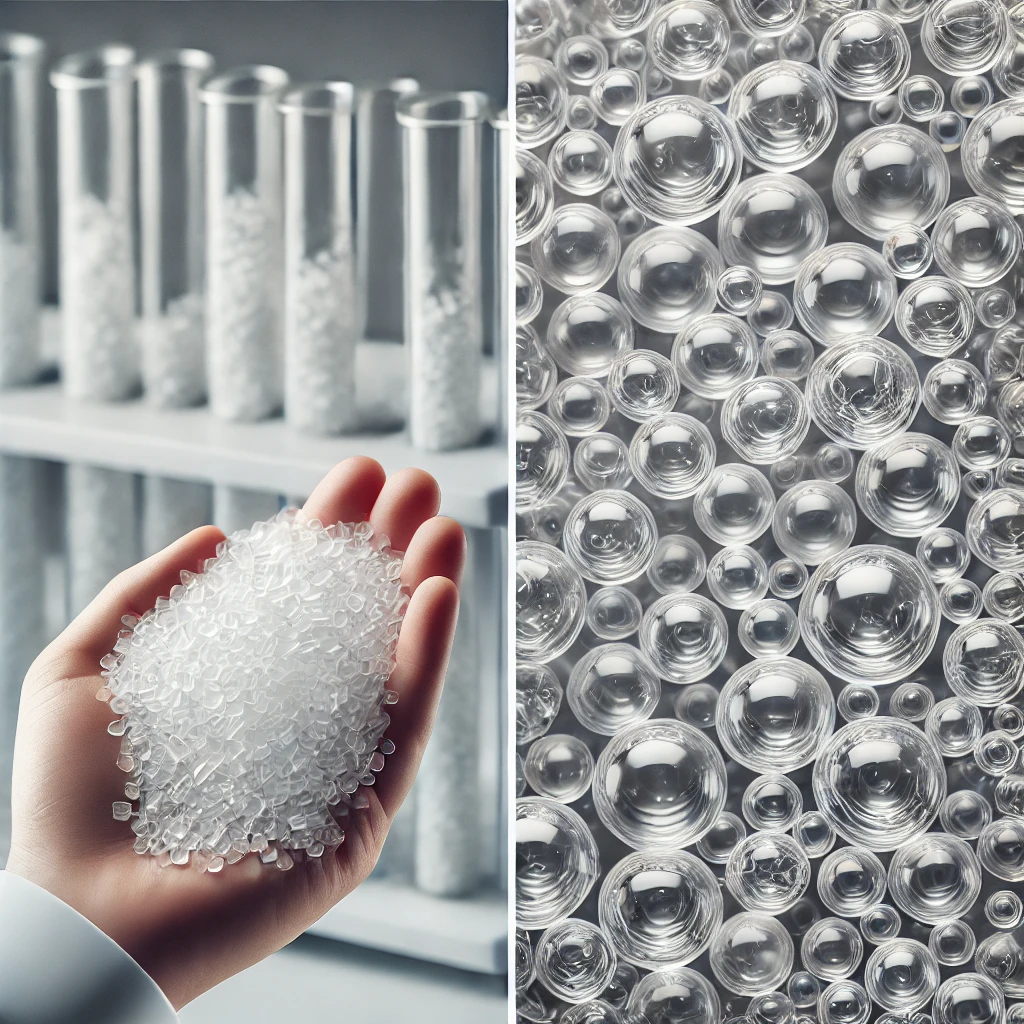
Preventive Measures for Bubble Formation:
-
Using Low-Volatility Plasticizers:
Selecting plasticizers with lower volatility is an effective way to reduce bubble formation. These materials remain more stable during the production process.
-
Process Temperature Control:
Precisely controlling the temperature during extrusion or injection stages of PVC processing can prevent excessive evaporation of plasticizers and PVC decomposition. Optimizing the temperature is a key step in minimizing unwanted gas generation.
-
Thermal Stabilizers:
Thermal stabilizers help prevent the thermal decomposition of PVC and absorb HCl, thereby reducing bubble formation. These additives prevent the production and entrapment of by-product gases.
-
Gas Exhaust Systems:
Implementing efficient gas exhaust systems or creating a vacuum during production facilitates the rapid removal of generated gases, preventing their entrapment in the granules.
Conclusion:
Bubble formation in PVC granules primarily results from the evaporation of volatile materials and thermal decomposition of PVC. These bubbles have a detrimental effect on the mechanical and aesthetic properties of the product. To address this issue, using appropriate materials, maintaining precise temperature control, employing thermal stabilizers, and utilizing gas exhaust systems are essential strategies.
